Showing posts with label popular science. Show all posts

2025-07-17

The Variabilities of Dopamine (₯) - PART VIII: Trust or Distrust? MeSH: D035502

In neurobiology, the study of trust has historically been dominated by oxytocin, the so-called "social hormone." This hormone is known to reduce anxiety and increase empathy, fostering a sense of trust. Conversely, increased levels of steroid hormones like testosterone can inhibit oxytocin secretion, thereby reducing empathy and trust. Amidst the scientific focus on these two key chemicals, dopamine was often relegated to a supporting role, thought to merely assist in regulating oxytocin to enhance the pleasure derived from cooperation and relationship-building. At best, it was considered a secondary player in the mechanism of trust.

However, since the early 21st century, cognitive neuroscience has begun a wider and deeper exploration of the relationship between dopamine and trust. This interdisciplinary field integrates applications from economic exchange games (such as trust games), psychological frameworks (motivation, emotion, and cognition), and neuroscience (brain circuits, hormones, and neurotransmitters). For example, the ventral striatum (vSTR), a key part of the mesolimbic pathway, regulates reward motivation and promotes reinforcement learning. When individuals learn to trust others through repeated interactions, dopamine neurons cause the vSTR to activate. This activation encodes a "reward prediction error" signal, the difference between an expected reward and the actual reward received. This dopaminergic neural mechanism provides the foundation for neuroeconomic models that explain how the human brain establishes and maintains trust (as illustrated in Figure 2).

The knowledge structure of trust can also be understood through its classification in the U.S. National Library of Medicine's Medical Subject Headings (MeSH). Under the ID D035502 (Figure 3), "Trust" is defined as "Confidence in or reliance on a person or thing." The MeSH hierarchy places "Trust" under the parent term "Interpersonal Relations," which itself falls within the "Behavior and Behavior Mechanisms" category. Its sibling terms include "Social Interaction" and "Social Skills." Furthermore, this classification reveals the relationship between trust and other topics previously discussed in the " Variabilities of Dopamine " series. For instance, "Behavior" has a descendant term "Exploratory Behavior" (curiosity); "Emotion" includes "Happiness," "Fear," and "Pleasure"; and "Motivation" includes "Goals." All these concepts fall under the broad umbrella of "Behavior and Behavior Mechanisms."


Strong evidence for the role of dopamine in trust comes from studies on its receptors. A 2023 neuroimaging study in the Nature Communications linked behavioral performance in trust-based tasks to neural activation. The study found that blocking the dopamine D2/D3 receptors in male participants altered activity in brain regions associated with trust, such as the prefrontal cortex and striatum. This research examined the relationship between dopamine and trust using the concept of "belief volatility": the stability of one's trust-related beliefs. This was measured using a Bayesian inference model, where beliefs are updated based on new evidence. The core concepts include:

  • Prior Belief: the initial level of trust before encountering new evidence.
  • New Evidence (Likelihood): new information or actions from the other person. 
  • Updated Belief (Posterior Belief): the modified level of trust after considering the new evidence.
"Belief volatility" is a metric derived from this statistical framework.

The study showed that antagonizing (blocking) D2/D3 receptors increased the volatility of trust-related beliefs. Higher volatility indicates less confidence; it means that an individual's assessment of another's trustworthiness is unstable and changes rapidly in response to new information. Conversely, lower volatility reflects more stable beliefs, and thus higher confidence, that are less swayed by new evidence. The experimental study by Mikus et al. (2023) provides direct behavioral evidence that dopamine regulates the stability of our beliefs about others.

So how does dopamine shape these trust-related beliefs?

A study by Schuster and Lamm (2025) at the University of Vienna highlights how recent experimental and clinical work has advanced our understanding of this process. It demonstrates that dopamine's role can be conceptualized within Bayesian inference frameworks, involving processes like precision-weighted prediction error computation and hierarchical belief updating. Until recently, dopamine was discussed primarily in the context of reinforcement learning. It was known that phasic (short-burst) dopamine firing tracks the magnitude of reward prediction errors, but growing evidence shows that tonic (sustained) dopamine levels signal the precision or certainty associated with those predictions. In essence, dopamine appears to mediate multiple aspects of belief updating on different time scales. The two key types of dopamine signals are:

1. Phasic Dopamine Signals: these are rapid, short-lived bursts of dopamine, often triggered by unexpected or rewarding events. Think of them as brief flashes that signal a surprise.
2. Tonic Dopamine Signals: this refers to the baseline, sustained level of dopamine in the brain. It sets the overall tone for how sensitive we are to new information.

This research clarifies that dopamine helps the brain update beliefs by managing the uncertainty of new information, allowing it to function optimally by minimizing surprise. According to Schuster and Lamm, modern tools like functional magnetic resonance imaging (fMRI) show that shifts in belief following a prediction error (a phenomenon known as Bayesian surprise) are encoded in dopamine-rich areas of the midbrain. Figure 5 illustrates the key substantia nigra/striatum and midbrain-cortical dopamine pathways involved in trust-based learning.

Schuster and Lamm's work further emphasizes that D2/D3 receptors are key to how the dopamine system regulates belief volatility. These receptors are crucial for distinguishing meaningful information from "noise." Imbalances in D2/D3 receptor function can be detrimental. If signaling is too high, we may struggle to distinguish important information from noise. If it is too low, we might fail to recognize new information that should cause us to update our beliefs. This function also regulates the speed at which we update our views of others. These findings provide new insights into the potential mechanism by which antipsychotic drugs targeting D2/D3 receptors can effectively reduce symptoms of severe distrust, such as paranoia.

In the context of "trust or distrust," variable dopamine helps the brain balance the influence of prior beliefs (old information) with incoming evidence (new experiences). By modulating this system, dopamine adjusts how much weight we give to new information. Increased dopamine signaling can make the brain prioritize new data over established beliefs. It is now clear that the decision to trust or distrust is not just a matter of social hormones but is fundamentally modulated by dopamine.

REFERENCE

  1. Zak, P. J. (2008). The neurobiology of trust. Scientific American, 298(6), 88-95; Zak, P. J. (2019). How Our Brains Decide When to Trust. Harvard Business Review
  2. Krueger, F., & Meyer-Lindenberg, A. (2019). Toward a model of interpersonal trust drawn from neuroscience, psychology, and economics. Trends in neurosciences, 42(2), 92-101.
  3. MeSH: D035502 ; MeSH: D005106 ; MeSH: D005239; MeSH: D006240; MeSH: D009042; MeSH: D006040
  4. Mikus, N., Eisenegger, C., Mathys, C., Clark, L., Müller, U., Robbins, T. W., ... & Naef, M. (2023). Blocking D2/D3 dopamine receptors in male participants increases volatility of beliefs when learning to trust others. Nature Communications, 14(1), 4049.
  5. Schuster, B. & Lamm, C. (2025). How dopamine shapes trust beliefs, Progress in Neuro-Psychopharmacology and Biological Psychiatry, Volume 136. Preprint Online Version, Nov.28.2024. 


2025-02-13

The Variabilities of Dopamine (₯) - PART VI: MeSH: D016520, D058068 and ICD11 (Just want to start a business)

“We [entrepreneurs] have incredible enthusiasm, and I think part of the success of any entrepreneur is energy.” 

(Dame Anita Roddick)

When we think of entrepreneurs, it's easy to think of their indomitable spirit - passion, energy, and insatiable drive. Anita Roddick, the brilliant founder of The Body Shop, once remarked in an interview with BBC’s Martin Lewis. This succinctly encapsulates the essence of entrepreneurs in the eyes of the general public—boundless enthusiasm and vitality.

Yet, the true nature of entrepreneurial passion runs deeper, as revealed by the intricate dance of neuroscience. This is vividly illustrated in the title of a scientific paper, "Baby, I'm addicted!" This research delves into the intoxicating world of dopamine, the chemical conductor orchestrating the pleasure-pain symphony of entrepreneurial addiction. Driven by dopamine, entrepreneurs often view their ventures as their offspring, forging an intense psychological bond that transforms initial fervor into an addiction to the entrepreneurial journey itself.

The unseen force propelling entrepreneurs—dopamine—is a fascinating, yet seldom highlighted, aspect of entrepreneurship. The U.S. National Library of Medicine’s Medical Subject Headings (MeSH) knowledge tree intriguingly maps entrepreneurship within the domains of "Technology, Industry, and Agriculture" and "Health Services Management." It defines entrepreneurship as the organization, management, and assumption of risk in a business venture, typically involving elements of change, challenge, and novel opportunities. In the realm of dopamine-fueled neurophysiology, these changes and challenges are intrinsically linked to our innate desires, rewards, goals, and the pursuit of novelty.

But dopamine's role in entrepreneurial zeal is just one facet of a burgeoning field—neuroentrepreneurship. Since 2009, this discipline has blossomed, spotlighting the profound influence of brain function on business decisions. Leading the charge in this nascent research are the United Kingdom, the United States, and India, with over 75% of studies emerging in the past five years. These investigations weave together neuroscience and entrepreneurship, exploring neurotechnology applications in business, the neural traits of entrepreneurs, and the ethical considerations of neuroentrepreneurship. Researchers delve into the brain regions involved in decision-making, the cortical activations that pave the way for business triumphs, and how an entrepreneurial mindset enhances the identification, evaluation, and exploitation of opportunities, ultimately refining decision-making processes.

In the grand tapestry of entrepreneurship, it's not just passion and energy that drive success, but a complex interplay of neurological impulses, challenges, and a relentless quest for novelty and rewards.

In the vibrant world of scientific inquiry, the year 2024 witnessed an intriguing collaboration between European and American scientists, spearheaded by Freeman and his team. Their article, titled "Dopamine and entrepreneurship: 
Unifying entrepreneur personality traits, psychiatric symptoms, entrepreneurial action and outcomes" unfurled a tapestry of understanding, weaving together the threads of dopamine and entrepreneurship.

This scholarly endeavor provided a comprehensive framework from a dopaminergic perspective, delving into the nexus of personality traits and psychiatric symptoms within the entrepreneurial sphere. The study deftly linked positive dopaminergic traits—such as openness, extroversion, and conscientiousness—with psychiatric conditions including bipolar disorder, obsessive-compulsive personality disorder (OCPD), attention deficit/hyperactivity disorder (ADHD), and behavioral addiction. Freeman and his colleagues painted a vivid picture, distinguishing between "dopaminergic superpowers" and the more shadowy "dopaminergic vulnerabilities."

The beauty of the dopaminergic perspective lies in its ability to furnish an analytical lens through which we can examine entrepreneurship. At its core, personality traits are etched into the brain's intrinsic functional neural networks, mirroring the interplay between enduring neurobehavioral tendencies and a spectrum of environmental stimuli. Among the Big Five personality traits, openness, extraversion, and conscientiousness stand as dopaminergic hallmarks. The dopaminergic system emerges as a maestro, orchestrating motivation and behaviors conducive to entrepreneurship—sensory and novelty seeking, exploratory actions, opportunity recognition, goal engagement, impulsivity, aggression, creativity, and cognitive prowess.

Dopamine, it appears, is the silent architect behind the scenes, driving the pursuit of reward goals. It sifts through salient information (opportunity recognition) and propels the achievement of goals that yield rewards (value creation), all within the dynamic landscape of entrepreneurial risk-taking.

Freeman et al.'s exploration began with the entrepreneur's "endophenotype" biomarker—dopamine. This intriguing term, rooted in the MeSH knowledge tree, encompasses measurable biological, behavioral, or cognitive markers. From this vantage point, the study illuminated how hyperdopaminergia and variations in dopamine physiology manifest across a spectrum of entrepreneurial traits and mental health syndromes:

  1. Conscientiousness: This trait may intertwine with compulsive behaviors, echoing the patterns seen in OCPD and addiction.
  2. Entrepreneurship addiction: An intriguing phenomenon where individuals find it impossible to resist the siren call of starting new ventures.
  3. Impulsivity and reward sensitivity: These traits are linked to emotional and risky decision-making, fueling the energy, speed, and action-orientation needed for entrepreneurial success.
  4. ADHD and bipolar disorder: Impulsive risk-taking and substance use, common in these conditions, reflect the same impulsivity and reward sensitivity seen in entrepreneurs. The brain's mesolimbic and cortical regions, through individual differences in dopamine processing, regulate the tendency to opt for smaller immediate rewards over larger delayed ones, sometimes leading to reckless mistakes and adverse business outcomes.

In essence, the intricate dance of dopamine within the entrepreneurial mind offers a rich tapestry of insights, revealing the delicate balance between the superpowers that drive success and the vulnerabilities that accompany the journey.

The 11th revision of the World Health Organization's International Classification of Diseases (ICD-11) offers a fascinating window into the world of "dopaminergic fragility." This term encompasses four intriguing conditions—addiction, bipolar disorder, obsessive-compulsive personality disorder (OCPD), and attention deficit/hyperactivity disorder (ADHD).

By utilizing the dopaminergic framework, we uncover a spectrum of traits associated with risk-taking and gain insight into why the admirable qualities of entrepreneurs may sometimes veer into darker territories like hubris, ruthlessness, and deviant behavior. The delicate balance of an entrepreneur’s dopaminergic superpowers and vulnerabilities can herald business success or failure and even personal derailment. Cognizant of this delicate balance, Freeman and his colleagues advocate for core competencies in self-awareness, emotional and behavioral regulation, and self-care (adequate sleep, defecation, and diet) as essential for entrepreneurs.

Neurobiologists have meticulously charted the dopaminergic highs and lows within the entrepreneurial psyche. From studies on endophenotypes—measurable biological markers of internal processes—we observe how abnormal dopamine levels manifest in broad personality traits and mental health syndromes. Compared to typical business managers, entrepreneurs display higher dopaminergic characteristics and psychiatric symptoms on average, a trait that could be linked to the factors driving their risk-taking successes. The hidden potential of dopamine means that while not everyone may fall into the thrall of entrepreneurship, the right environmental triggers and genetic expressions at pivotal moments could make the allure of starting a business irresistible.

The thought of entrepreneurship may not be a mere fleeting fancy, 

but a profound and, sometimes, inescapable call driven by the very chemistry of our brains.

Reference

  • Wikiquote: Entrepreneurs, https://en.wikiquote.org/wiki/Entrepreneurs  
  • Sinha, R. S. (2022). Baby, I'm addicted! The pleasure-pain pathway that shifts entrepreneurial passion to entrepreneurial addiction: Pivotal role of dopamine. Journal of Business Venturing Insights, 18, e00340.
  • MSH:D016520: http://id.nlm.nih.gov/mesh/D016520  
  • Juárez-Varón, D., Zuluaga, J. C. S., & Recuerda, A. M. (2024).Neuroentrepreneurship: state of the art and future lines of work. International Entrepreneurship and Management Journal, 1-15.
  • Freeman, M., Lerner, D., & Rauch, A. (2024). Dopamine and entrepreneurship: Unifying entrepreneur personality traits, psychiatric symptoms, entrepreneurial action and outcomes. Journal of Business Venturing Insights, 21, e00461.
  • International Statistical Classification of Diseases and Related Health Problems,ICD, ICD11: 334423054: http://id.who.int/icd/entity/334423054 (2025-01 version)

2024-12-27

The Variabilities of Dopamine (₯) - PART V: MeSH: D005239 & NBO:0000209 (Fear Comes in to Play)

Do you still remember the 67-year-old dopamine girl in the history of dopamine science this year? She gradually became a spokesperson for happiness in her twenties. However, behind this happiness is actually a little fear. In the early stages of research, scientists used basic tools to explore dopamine's role, focusing on its relevance to psychosis and antipsychotic drugs. Initial claims that dopamine was involved in fear conditioning were dismissed due to the inadequacies of the drugs, tools, and techniques used. However, with the development of science, it turns out that the purple "Fear" in "Inside Out" also has some relationship with the dopamine girl. Let's do some brain teasers together this time!
 
In "Dopamine at Forty," we learned that dopamine (DA) is more than just the "happy molecule" we once thought it was. Thanks to advancements in genetics, chemistry, and other technologies in the 21st century, scientists now understand dopamine and its interactions with neurons (DAN) and receptors much better.

These breakthroughs have shown us how dopamine is involved in both fear conditioning (how we learn to fear things) and fear extinction (how we stop fearing things). For example, a 40-year review of dopamine research revealed that different dopamine receptors play different roles in this process:
D1 in the amygdala “promotes” neuronal plasticity; D2 “inhibits” the plasticity of neurons; D3 in the ventral striatum (nucleus accumbens and olfactory tubercle) reflects functions such as fear, anxiety, and depression.
 
Figure 1: Dopamine, worker cells DAN and dopamine receptors are involved in fear conditioning and extinction
 
Canadian scientists, including Hamati, have studied dopamine and fear for almost 66 years. So why don't we hear much about dopamine's role in fear? Early research methods were limited, and most studies focused on animals, with human studies being relatively new. However, fear, like happiness, is one of our most basic emotions. By looking at Hamati's research, we can see which brain areas are active during fear conditioning and extinction. This new information about dopamine and its receptors is helping us understand the full story of dopamine's varied roles in the brain.
 
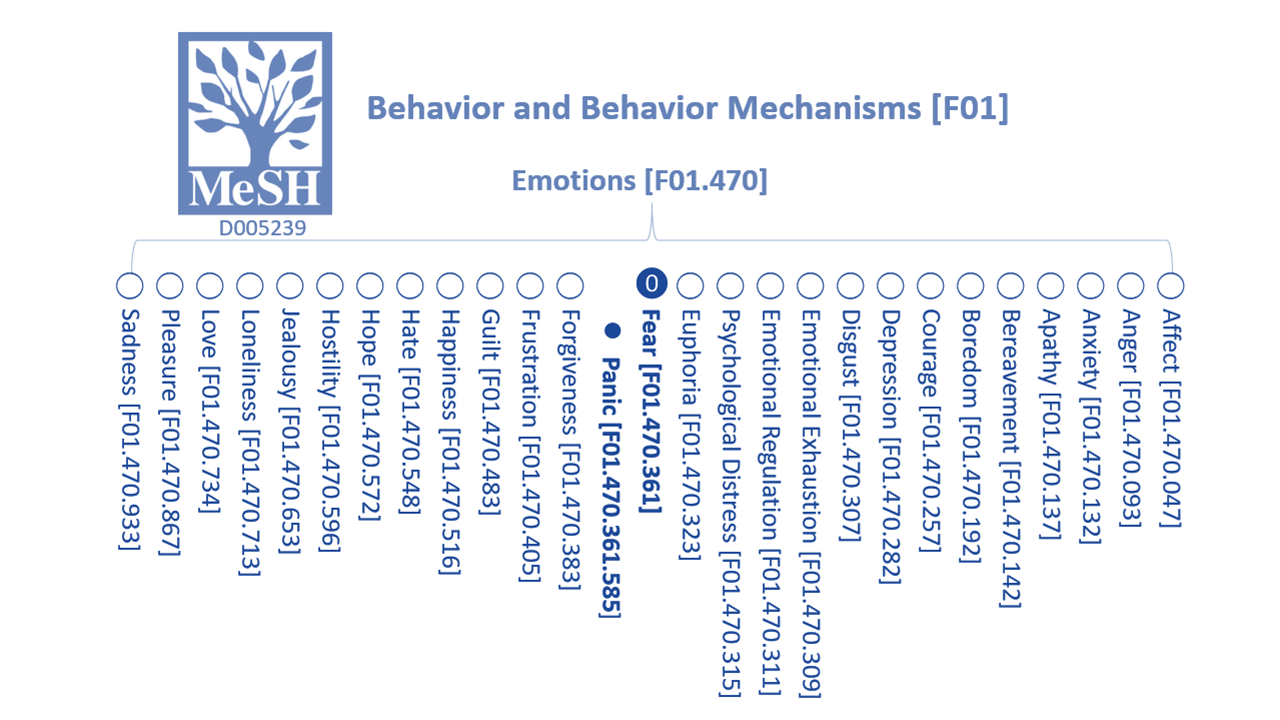
First, we first use the U.S. National Library of Medicine Medical Subject Title (MeSH) knowledge tree to quickly grasp fear (MeSH: D005239). The knowledge structure in behavior and behavioral mechanisms is shown in Figure 2. And the fear condictioning of Neuro Behavior Ontology (NBO) (NBO:0000209) is shown in Figure 3. According to the NBO's definition of fear conditioning: 
 A type of associative learning that allows organisms to acquire affective responses, such as fear, in situations where a particular context or stimulus is predictably elicits fear via an aversive context.
In other words, fear conditioning is the process by which our brains learn to associate certain things with fear. This mechanism plays a crucial role in how we respond to potentially threatening situations, where the brain makes connections between ordinary things and scary things.
Figure 2: Fear MeSH: D005239 Knowledge Tree|Source: MeSH and revised by A.H. 
 Figure 3: Fear Conditioning: NBO: 0000209 knowledge tree | Source: NBO and revised by A.H.

Hamati et al. discussed the role of dopamine in classical fear conditioning and extinction. The process of encoding fear roughly includes several stages: Acquisition, Consolidation, Recall, Extinction(training, recall and return) of memory. In fact, what is most fascinating about DA's role in fear is its dual nature. While it helps encode fear, it also plays a role in the extinction of these memories. The study uses the acquisition and recall of conditioned fear stimulus (CS+) in classical conditioning theory to represent the ability to learn fear; the acquisition and recall of conditioned safety stimulus(CS−) as well as extinction training and extinction recall represent the ability to inhibit learned fear. Overall, both fear conditioning and extinction altered the activity of worker DAN cells and altered DA concentration levels in multiple brain regions, see Figure 4.
Figure 4: Effects of fear conditioning and extinction stages on DA levels in the brain|Source: adapted from Table 2 of Hamati et al.
 
  • Areas with increased DA activity levels: The amygdala is the most critical area in fear conditioning. DA increases during the acquisition and recall stages, along with terminal activity in the prefrontal cortex and most ventral midbrain periaqueductal gray matter (PAG)/ In the dorsal raphe nucleus (DRN) area, DA was increased.
  • Varies according to its location: Ventral tegmental area (VTA) in the animal literature suggests that DA is released in the medial prefrontal cortex (mPFC) during all stages of fear conditioning and extinction, but DAN activity in the medial and lateral VTA may depend on anatomy location and species. Because the number of active DANs in the substantia nigra pars compacta (SNpc) did not change after fear acquisition, the involvement of the SNpc in fear conditioning was not supported in the initial study. However, with the advancement of technology, during the fear acquisition process, the dorsolateral part of the SNpc has been suggested that regional DAN activity tends to increase, and the ventromedial region activity tends to decrease, which suggests that similar to the VTA, DA neuron activity in the SNpc varies depending on its location.
  • Uncertain region: Although the striatum, together with the amygdala, is considered a hub for coordinating fear responses and has the highest density of DA receptors relative to other brain regions, due to technical differences, the causal discussion on DA fear is still inconsistent and open for discussion.
Both D1-like and D2-like dopamine receptors help in learning and unlearning fear. D1-like receptors are important for picking up and solidifying memories, while D2-like receptors help in storing and recalling these memories. These receptors can work together in some brain areas or have their own unique roles. They work by sending signals through different brain regions like the amygdala, prefrontal cortex, hippocampus, and thalamus. See Figure 5.

Figure 5: Fear conditioning and extinction binding receptors|Source: adapted from Hamati et al. Figure 3
  • Amygdala and Prefrontal Cortex: Both these brain areas help in fear learning and unlearning. D1-like and D2-like receptors work together here. In the amygdala, when dopamine binds to these receptors, it helps create and stabilize fear memories. When recalling these memories, the brain reactivates them. On the other hand, getting rid of fear, like during fear extinction training, creates new circuits to suppress fear. In the medial prefrontal cortex (mPFC), dopamine helps inhibit fear, influenced by different subregions and types of neurons.
  • Hippocampus: The D1-like and D2-like receptors in the CA1 part of the hippocampus help in consolidating fear memories, recalling them, and unlearning them during extinction training.
  • Thalamus: Here, D2 receptors help in fear learning, while D1 receptors help in unlearning fear.
  • Olfactory Tubercle: This area, part of the nucleus accumbens, has neurons with dopamine receptors that respond to fear conditioning cues.
In the past, we thought of dopamine mainly as the chemical behind pleasure, motivation, and setting goals. But thanks to scientific progress, we now know dopamine does much more. Think of dopamine and the cells it works with (DAN) as storytellers, recording tales of curiosity, fear, and safety. Our brain isn't just a static memory bank; it's like a constantly changing landscape, shaped by our experiences. Dopamine sends signals through receptors that help form, strengthen, and retrieve memories of fear and how to overcome it.

Dopamine isn't just hanging out; it's a key player in learning fear. When we're conditioned to fear something, DAN cells light up, record fear memories, and send signals to parts of the brain like the amygdala and prefrontal cortex, which handle fear processing. Overcoming fear, or fear extinction, is like turning on a light in a dark room, slowly making the fear disappear. During this process, the brain learns that the once-feared thing is no longer a threat. Dopamine plays a dual role here, working with DAN cells and receptors to update and overwrite fear memories. Fear becomes a useful emotion, helping us prepare for danger. In the end, there's a balance between fear and safety, and dopamine helps maintain that balance.

Reference
  • Kawahata, I., Finkelstein, D. I., & Fukunaga, K. (2024). Dopamine D1–D5 Receptors in Brain Nuclei: Implications for Health and Disease. Receptors, 3(2), 155-181.
  • Hamati, Rami, et al. "65 years of research on dopamine's role in classical fear conditioning and extinction: A systematic review." European Journal of Neuroscience 59.6 (2024): 1099-1140

2024-12-25

The Variabilities of Dopamine (₯) - PART IV: MeSH:D011954

Dopamine is a pretty quirky character. Not only does it act as a neurotransmitter, but it also behaves differently depending on the "dopamine receptor" it binds to. Imagine these receptors as different doorways on the surface of a cell, each one changing how dopamine does its job. So, what's so special about these receptors? Well, think of them like the VIP passes that let dopamine into the cell club. You've probably heard about receptors because of the coronavirus (yep, the COVID-19 villain). The virus uses a special receptor called "ACE2" to sneak into our cells. Using this same idea, you can picture dopamine needing its own special receptors to get things done. In short, dopamine receptors are like the bouncers deciding who gets into the cell party, and without them, dopamine would just be left knocking on the door! 

Receptors on the surface of cell membranes are like the gatekeepers for cells to receive signals. These signals come from neurotransmitters, which are chemicals that help pass messages in the brain. When a neurotransmitter arrives, it interacts with G proteins in the cell membrane through special receptors on the surface, generating second messages inside the cell. These second messages kickstart various biochemical reactions in the cell, influencing downstream activities.

These receptors are called G protein-coupled receptors (GPCRs), the largest group of receptors that affect nearly all aspects of human physiology. Interestingly, about 40% of all approved drugs work by acting on GPCRs. Dopamine receptors are a type of GPCR found in neurons throughout the brain and body. When dopamine (DA) signals reach a nearby neuron, they bind to these specific receptors on the cell membrane of the neuron. This interaction helps regulate sensory and nerve signal transmission, as well as important processes related to cell balance and growth. 

Figure 1 shows how the small chemical molecule dopamine (DA) attaches to a larger dopamine receptor molecule and sends chemical signals by causing changes in the neurons that receive the signal. Think of the neurotransmitter (DA) and the receptor as a key and a lock. In this case, DA is the key and is called a ligand in biochemistry. A ligand is something that forms a complex with biological molecules to achieve a purpose. The word "ligand" comes from the Latin word "ligare," meaning "to bind." The ligand must fit well with its receptor, like a key fitting into a lock, to activate or inhibit protein activity, thus starting or stopping cellular responses. (part of the illustration of dopamine receptors uses BioRender components)

Next, let's dive into the expert definition of dopamine receptors.  

Figure 2 shows that, according to the Medical Subject Headings (MeSH) of the U.S. National Library of Medicine, the ID number for the dopamine receptor is D011954. It's defined as: “Cell-surface proteins that bind dopamine with high affinity and trigger intracellular changes influencing the behavior of cells.” From the MeSH dendrogram (a type of diagram showing relationships), we can see that the dopamine receptor is part of a larger protein family, which includes neurotransmitter receptors, biogenic amine receptors, and GPCRs. It's related to adrenergic receptors and has subcategories like D1 and D2 receptors, along with their subtypes D5, D3, and D4. 

      Receptors, Dopamine D1: A subfamily of G-PROTEIN-COUPLED RECEPTORS that bind the neurotransmitter DOPAMINE and modulate its effects. D1-class receptor genes lack INTRONS, and the receptors stimulate ADENYLYL CYCLASES.

  • Receptors, Dopamine D5: A subtype of dopamine D1 receptors that has higher affinity for DOPAMINE and differentially couples to GTP-BINDING PROTEINS.

      Receptors, Dopamine D2: A subfamily of G-PROTEIN-COUPLED RECEPTORS that bind the neurotransmitter DOPAMINE and modulate its effects. D2-class receptor genes contain INTRONS, and the receptors inhibit ADENYLYL CYCLASES.

  • Receptors, Dopamine D3: A subtype of dopamine D2 receptors that are highly expressed in the LIMBIC SYST­EM of the brain.
  • Receptors, Dopamine D4: A subtype of dopamine D2 receptors that has high affinity for the antipsychotic CLOZAPINE.

Simply put, dopamine receptors are divided into two different families based on their effects on adenylyl cyclase, an intracellular signal transduction and key enzyme involved in cell regulation: D1 and D2, or "D1 like receptors: D1, D5" and "D2 like receptors: D2, D3, D4", depending on whether their activation leads to stimulation or inhibition of the enzyme , and pharmacological differences.

Secondly, different descendant families are subdivided based on homology, pharmacological and biochemical properties. Endogenous dopamine or exogenous dopamine drugs activate receptors, also known as dopamine receptor agonists, and the activated protein activity can initiate cellular responses and increase dopaminergic activity in the brain, which helps It is used to reduce the symptoms of Parkinson's disease (dopamine deficiency); on the contrary, antagonists inhibit protein activity, shut down cell responses, and are used in schizophrenia with overactive dopamine.

In addition, dopamine receptors are also closely related to biological neuropsychological functions. In fact, the research on dopamine receptors was about 15 to 20 years behind the research on dopamine. The journal "Neuropsychopharmacology" mourned the late Canadian pharmacologist Philippe Philippe who was famous for his dopamine receptors. Philip Seeman mentioned that people's awareness of the existence of two dopamine receptor subtypes (later designated as D2) began with Professor Seeman's antipsychotic drug research in 1974. In 2024, scientists Kawahata and others from Tohoku University in Japan and the University of Melbourne in Australia reviewed nearly 40 years of research (1984~2023) and sorted out the impact of dopamine D1-D5 receptors in the brain on health and disease. They pointed out in the paper, biological functions of dopamine receptors extend beyond functions such as movement, cognitive memory, motivation, and drug addiction, revealing another potential reason why polypeptide dopamine is so variable. This study reviews the distribution of dopamine D1-D5 receptors, based on the physiological significance and disease correlation represented by different regions in the brain. It not only advances our basic knowledge of the central nervous system, but also provides powerful clues for therapeutic intervention.

In summary, the focus of Kawahata et al.'s research includes five major areas: striatum: ventral, dorsal, and nucleus accumbens; prefrontal cortex; subthalamic nucleus; limbic system: amygdala, hippocampus; midbrain : Substantia nigra pars compacta (SNc) and ventral tegmental area (VTA). The psychological and physiological functions of dopamine receptors D1 to D5 in Figure 3 include:

  • The "happy" function is mainly located in D2 in the ventral striatum.
  •   "Motivation and reward" are widely reflected in D1 to D4 of the striatum; D2 and D3 of the prefrontal cortex; D2 and D3 of the subthalamic nucleus; D3 of the amygdala; D2 of the substantia nigra and ventral tegmental areas D1 and D3. D4.

In addition, regarding the response to "novel things", last time we focused on the working cells dopaminergic neurons (DAN). This time we can combine dopamine receptors to more completely understand how brain neurons arouse curiosity. In response to novelty, D4 receptors may have the greatest contribution. "D4 curiosity" is mainly reflected in the dorsal striatum, prefrontal cortex, subthalamic nucleus and amygdala, and has a role in coping with novel things in the substantia nigra. 

Research on D4 receptors and their link to curiosity and novelty-seeking behavior is fairly recent, starting around 1996 (less than 30 years from now). Since studies vary based on the groups of people studied, methods used, and statistical tests applied, the findings may differ. To sum it up, dopamine receptors from D1 to D5 each have unique features, are distributed differently in the brain, and respond to dopamine in their own ways. 

Interestingly, more and more evidence suggests that different ways dopamine affects these receptors can influence our brains in surprising ways we didn't realize. Are you feeling curious about this now? Dopamine is doing its job! (to be continued)


 Reference

  1. 金克寧, 現代藥物標靶—G蛋白偶合受體之研究解析, 科學月刊. 516期. 2012.12.01
  2. 林書瑤,【化學奇境】受體‧受體‧受體, 台大科教中心CASE報科學, 2010.12.23
  3. wikipedia:ligand
  4. MeSH(D011954)
  5. Madras, B., George, S. In memoriam professor Philip Seeman (February 8, 1934-January 9, 2021). Neuropsychopharmacol. 46, 1229–1230 (2021).
  6. Kawahata, I., Finkelstein, D. I., & Fukunaga, K. (2024). Dopamine D1–D5 Receptors in Brain Nuclei: Implications for Health and Disease. Receptors, 3(2), 155-181. ; this study is limited to dopamine receptors in the central nervous system of the brain. Other non-central nervous system dopamine receptors including the heart, lungs, renal system, and pancreas are not discussed in this scope.
  7. Oak, J. N., Oldenhof, J., & Van Tol, H. H. (2000). The dopamine D4 receptor: one decade of research. European journal of pharmacology, 405(1-3), 303-327.; Paterson, A. D., Sunohara, G. A., & Kennedy, J. L. (1999). Dopamine D4 receptor gene: novelty or nonsense ? Neuropsychopharmacology, 21(1), 3-16.
  8. BioRender (2022). Distribution of Dopamine Neurotransmitters in the Human Brain.


2024-06-27

The Variabilities of Dopamine (₯) - PART I:ChEBI:18243


Fig 1: dopamine chemical families
Upon reading the article, the Variabilities of Dopamine (₯) - Prequel, we discover that our understanding of dopamine encompasses various facets, which shift with the passage of time and the context in which we perceive them. Dopamine is usually introduced by explaining that it is an organic chemical from the catechol/catecholamine and phenethylamine families. But wait, what are the names of all these chemical compounds popping up all of a sudden? What's going on with this line of scientific family tree? For complex information, we can use a powerful tool that integrates the breadth and depth of knowledge units, the so-called Knowledge Graph (KG) and an ontology that clarifies the structure and "relationships" between knowledge. The ontology mentioned here was originally established by scholars from various disciplines. It provides a method for computers to "understand" the semantics of data to perform calculations, describe it in a universal machine-readable format, and integrate other knowledge sources for application in different fields.


The most familiar KG is the information box displayed on the right side of Google search results. As a framework for understanding the entities and their relationships in the real world, the information that appears most often in the structured database - Wikipedia, and one of the wisdom behind this comes from semantic & ontological structures. If the ontology is placed in the context of popular science, it will help us quickly grasp the information, which is the saying that a picture is worth a thousand words. Because ontology has the advantage of visualizing data and combining images and textual knowledge trees to help readers move from familiar visual representations to abstract scientific understanding, we will try to use different ontologies to convey the complex stories of dopamine and bring readers to the concept of dopamine from the micro and macro perspectives respectively, and understand "her" properties, structure and basic knowledge more accurately.

Ontology: ChEBI

Within the realm of biomedical ontology, every knowledge unit—whether an entity or a node—embodies a distinct biological or chemical entity (such as genes, cells, diseases, drugs, and more), revealing essential attributes inherent to each compound. In the ontology, each connected edge (relation) describes the interaction or relationship between entities (such as "drugs treat diseases" or "cells up-regulate genes"). Therefore, using the standard vocabulary of "Chemical Entities of Biological Interest (ChEBI)" as a formal introduction to dopamine is quite consistent with our understanding of dopamine's molecular structure, role in biology, and common understanding among entities. Chemistry-specific relationships (such as the relationship types and family pedigrees depicted in Figure 2) take into account the need for both broad and in-depth understanding.

ChEBI is part of the Open Biomedical Ontology (OBO) of the Heidelberg-based European Molecular Biology Laboratory- European Bioinformatics Institute (EMBL-EBI) and focuses on integrating and describing data on "small" compounds. "Molecular entity" refers to any structurally or isotopically distinct atom, molecule, ion, ion pair, free radical, radical ion, complex, conformational isomer, etc. Recognizable as individually distinguishable entities, the molecular entities in question are either natural products or synthetic products designed to intervene in biological processes. ChEBI contains the relationship between an ontology classification and a specified molecular entity, or an entity class and its parents and/or children, usually called as a "parent-child relationship."

 Figure 2: part knowledge structure of dopamine

Dopamine in ChEBI Ontology
Dopamine (ChEBI: 18243) is defined in ChEBI as: Catechol in which the hydrogen at position 4 is substituted by a 2-aminoethyl group. 18243 is the "unique identification number" provided by ChEBI to each entity. In Figure 2, ChEBI: 18243 is a family of main group molecular entities (ChEBI: 33579), including one or more of any group in groups 1, 2, 13, 14, 15, 16, 17 and 18 of the periodic table of elements. A molecular entity of atoms. Dopamine, in this tree view, can be described as being a (is a) catecholamine (ChEBI: 33567), a monoamine molecular messenger (ChEBI: 25375), and an organic molecular entity (ChEBI: 50860).


However, dopamine also belongs to another branch of the family of chemical entities: phenols (ChEBI: 33853). As examined in Figure 3, it can be seen that dopamine is also a polyatomic entity (ChEBI: 36357), an organic aromatic compound (ChEBI: 33659), and a catechol (ChEBI: 33566). In Figure 1, it can also be seen that the conjugate base and conjugate acid of dopamine is dopamine (1+) (ChEBI: 59905), which is any mammalian "metabolite" produced during human metabolic reactions. In biology, the scientific role is related to neurotransmitter disorders. In subsequent articles, we will use other ontologies to further introduce it.

Figure 3: part knowledge structure of dopamine (graph view)

In one of the main relationship categories of ChEBI "has role", the biological role of dopamine is described (ChEBI: 24432), including β-adrenergic agonists, E. coli metabolites, dopaminergic drugs, mimetic sympathogenic agents, mouse metabolites, and human metabolites. The application relationship (ChEBI: 33232) describes the intended use of the molecular entity or its parts by humans. Therefore, the application level of dopamine includes: cardiotonic drugs, β-adrenergic agonists, dopaminergic drugs and sympathomimetic agents, etc. 


Figure 4: similar structures & has part relations within dopamine
There are also descriptions and links in the ontology. If we use the "has part" relationship query in ChEBI, we can also find compounds containing dopamine structures, which currently include at least 1387 entities, and we can also find 59 compounds similar to this structure, as shown in Figure 4 shown. 

The latest version (2024/06/27) of ChEBI contains nearly 62,000 compounds and more than 190,000 "relationships". ChEBI has a wide range of applications, including the construction of biomedical knowledge graphs, its rich hierarchical structure and other relationship types, which can provide therapeutic assistance in identifying chemical entities in Alzheimer's disease and dementia literature. So the final question is, is it feasible to directly use ChEBI’s dopamine to communicate directly with the public? 

Of course! As shown in Figure 5, PubChem, an open chemical database of the U.S. National Library of Medicine and the National Institutes of Health (NIH), uses ChEBI: 18243 as the source of information describing dopamine. In addition, when the news media acquaints us with dopamine’s role in pain, they cite ChEBI: 18243 as their source. ChEBI’s portrayal of dopamine reveals it as a chemical entity. But what narrative lies within its ‘cell family lineage’? (To be continued…)"


Fig 5: Using ChEBI:18243 for the reference source in PubChem