


 |
| To write or To Type is a question to brain connections |
 |
| Long COVID: Immune Damage |
 |
| Long COVID : synapse |
 |
| Long COVID : microglia |
 |
| Long COVID : dopamine |
COVID-19 reinfection, the further you hide, the better: The more reinfections there are, the higher the chance of contracting COVID-19...

( Amali Lokugamage , 2020 and later cited by the Director-General of WHO [1])
Back in time and space, in late May 2020, most countries around the world were under lockdown and the pandemic was out of control. Relying on smartphones, computers and multimedia materials shot by themselves, non-professional volunteers were talking on Twitter about the original situation after the diagnosis of the COVID-19. Although recovery was expected, various medical symptoms of sequelae occurred one after another. Terms that were not in the scientific dictionary of pandemic prevention originally resonated and reached consensus after exchanges in the online community, and then developed a common term, which is now known as "Long COVID " or another term that is less familiar in Taiwan. A similar word is "Long-hauler/long -haul COVID".[2]
What we now know as "Long COVID" is no longer a virtual event in the online world, but a "scientific object" recognized by scientists and international organizations . The World Health Organization (WHO) officially defines: Post COVID-19 condition (Long COVID) refers to the continuation or development of new symptoms 3 months after the initial SARS-CoV-2 infection, with these symptoms lasting for at least 2 months with no other explanation.[3] The incidence rate of Long COVID patients has also increased from 10% or 20% in early studies to 30-60% as recently described in Nature Scientific Reports ( August 2023), and has adverse effects on the immune system [4]. However, what caught my attention was this narrative in the journal:
“Interestingly, the term long COVID is a patient-created term promoted in Twitter by Elsa Perego, an archeologist at University College London."

So we can’t help but wonder, how did it all start?
If according to the WHO definition of "Long COVID", the symptoms last for two months after three months of infection and the total course of the disease is five months, then the time point in May 2020 in the literature reflects the cumulative number of cases after the initial large-scale infection in European and American countries. A certain number of patients "theoretically recover" after diagnosis but continue to suffer from various symptoms. At that time, health authorities and medical institutions in most countries had not yet realized the possibility of long-term sequelae of SARS-Cov-2 infection, and initial information from the WHO also stated that the average course of illness for mild COVID-19 only lasted two weeks.
Perego's tweet on May 20, 2020 (UK time) was the earliest COVID-19 tweet recorded in the literature. Subsequently, hashtags related to COVID-19 appeared in online social media as shown in the Figure.

 |
| Click the figure for the PDF with source links. |
The PDF Figure summarizes the process of the formation of Long Covid citizen science since May 2020. It is mainly based on research by Perego and Felicity Callard, professor of human geography at the University of Glasgow, UK, and universities such as Cambridge and Oxford in the UK. Melody Turner and others recorded the development process of the #longcovid revolution in 2020 [8][9][10]. Starting with the first tweet in May, Twitter communities quickly built up with other online media (such as Facebook, Slack, and WhatsApp communities), and in the process introduced long COVID as a social condition. It was recognized as a medical condition by WHO in just three months, prompting the WHO's International Classification of Diseases 11th Revision (ICD-11) to officially define Long Covid as a post-COVID-19 symptom [11]. The PDF figure also concludes with a public appeal published by the editors of the journal Nature in October of the same year:"Long COVID: let patients help define long-lasting COVID symptoms."
Subtitle: "The terminology for long-lasting COVID symptoms — and the definition of recovery — must incorporate patients’ perspectives"“From a rather humble tweet (which introduced a new hashtag and was initially only “liked” once), in just three months it transformed into a word used by the WHO,” Perego recalls. The use of longcovid has grown exponentially. In one week, there was a shift from social media to print media. In just one month, medical journals went from discussions and appeals to scientists starting to define it, to the quotation marks of "COVID-19" disappearing from mainstream media and scientific journals, and the term "COVID-19" was used directly. Months later, after Maria Van Kerkhove, WHO’s technical lead on COVID-19, contacted the British Long Covid SOS (Long Covid SOS) to learn about the advocates’ requirements, the Director-General of WHO held an online meeting with Long Covid SOS. Advocates discuss the disease.
Patient symptom stories: COVID-19 affects more than just the lungs


A widely circulated tweet in April 2020, and then a newspaper column, emphasized that the patient's sequelae were "purely stomach symptoms" and not pulmonary. Other patients' multi-organ sequelae have successively shared themselves on various platforms. medical examinations, requiring medical services to conduct in-depth investigations and calling traditional research groups. These "symptom stories" have now been validated in many scientific journals. In other words, these patients not only provide raw data of early complex symptoms, correct the scope of COVID-19 damage, highlight the need to pay attention to all potential aspects, and provide insights into the mechanisms of the disease. and treatment hypotheses.
The study published by Turner and others in 2023 mentioned that this was started by Turner himself and other researchers after experiencing symptoms of Long Covid. She reflects on how her experience help her research work and questions how and why patients identify with Long Covid in front of various medical facilities, thereby questioning the process of traditional evidence-based medicine. They collected and sorted out more than 30,000 tweets with the tags #longcovid and #longhauler, further semantically analyzed the keywords in the content of 974 tweets, and concluded that: Twitter users initially described the Long Covid as a ruthless, multi-organ disease, disabling diseases, but due to the lack of awareness among the public and medical institutions at the time, these Twitter users faced unfair treatment of stigma and discrimination. However, these early Twitter users with long COVID were later recorded by research as having long COVID. Through this collective social movement, the first scientific demonstrators who experienced the disease established a consensus on the medical care needs of COVID-19 patients.
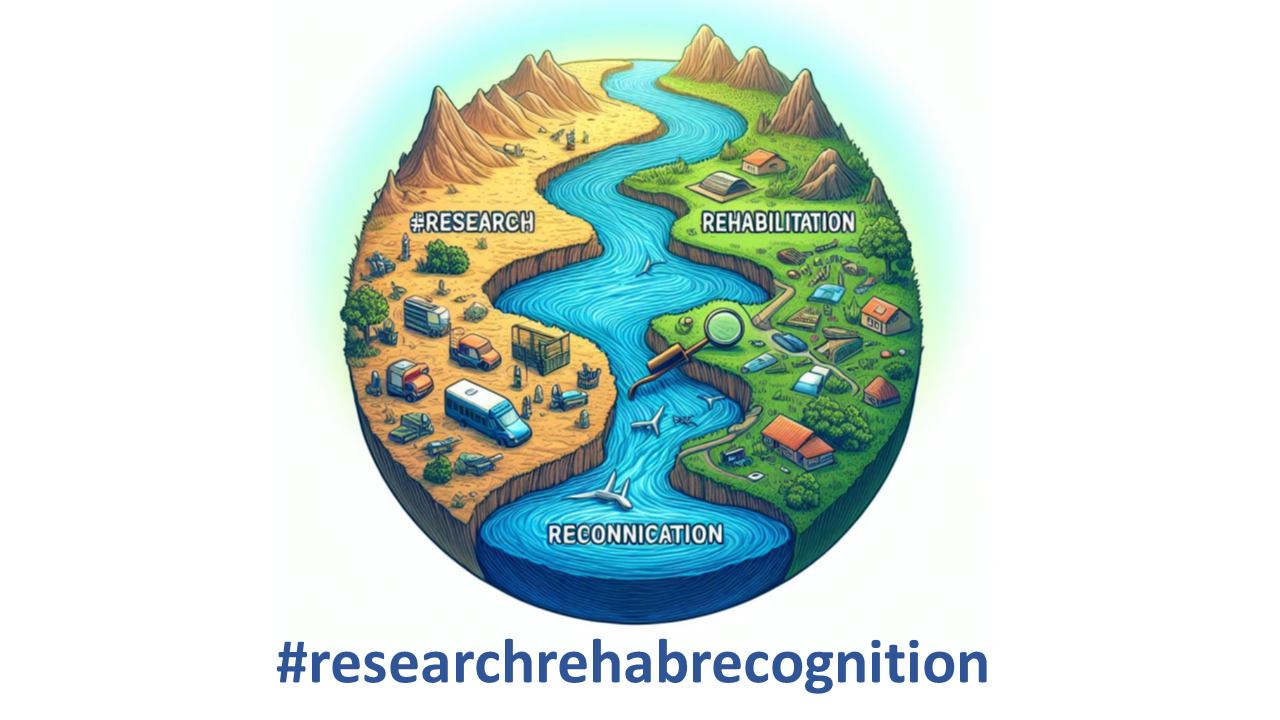
At the same time, another Twitter tag #researchrehabrecognition also attracted the attention of the Director-General of the World Health Organization, who finally acknowledged the problem of Long COVID and urged to solve it. Turner and others explained that patients with Long COVID have a different experience of the disease. Meaning is largely understood as valuable forms of knowledge that allow for a more complete understanding and treatment of conditions and their effects. This citizen knowledge directly impacts clinical practice by shaping the way clinicians discuss diagnoses with patients, improving access to care. Ability to reach consensus on the program and any recommended lifestyle changes.
Long Covid Citizen Campaign: Concrete response from health services
Another online social movement mentioned by Perego and Callard also forced the British government to take concrete action. In July 2020, Nisreen Alwan, a public health professor at the University of Southampton in the United Kingdom, who had Long Covid), Alwan launched a social media campaign "#CountLongCovid ", emphasizing the urgent need for correct definitions of recovered cases, standardization of data collection, and large population-based sample data, and therefore called for comprehensive collection and monitoring of long Covid .
In September, netizens gathered on Twitter based on the context of "six months ago" and left their personal comparison stories before and after COVID-19. Now we can use the Thread Reader App to merge these tweets to get a glimpse of how the online community at that time connected personal experiences of COVID-19 [12]. At the end of 2020, the British Office for National Statistics announced that "long COVID" surveillance data confirmed that the true prevalence was higher than previously thought, and that patients' symptoms lasted for three months or longer [13]. In addition, for children and adolescents, the #LongCovidKids campaign also contributed to the public hearing on children and adolescents held by the British Parliament’s cross-party parliamentary group on long COVID in January 2021. On February 16 this year, the WHO also announced the Official definition of Long Covid for children and adolescents [14]
Turner et al. summarized six themes of the #longcovid tweet tag:
For example, in the tweet, participants commented on how medical institutions gradually became aware of the COVID-19 pandemic and were recognized by official medical care, such as the then US chief medical adviser Anthony Ford. and WHO Tedros Adhanom Ghebreyesus, thus creating opportunities for concrete action by health services and new understandings for society and science.
The openness of online social media breeds citizen science

The knowledge of patients with Long COVID has been
directly initiated by the public to participate in research on the health
hazards of themselves or their communities, which has improved the academic and
medical circles' new understanding of COVID-19. Knowledge is spread from
patients through the media to formal clinical and health policy channels. According to the analysis of Turner and others, Long COVID has transformed
from an invisible disease to a recognized disease. The positive actions of
these online communities and the collective consensus reached are enough to
prove to medical institutions, including the WHO, that Long COVID is a real
disease despite the lack of traditional evidence-based medicine. A group of
online citizens collectively wrote the first textbook on Long COVID in 2020. At
this moment, we are witnessing the mass power of the online community, which
not only promotes real changes in the real world, ensures recognition of medical
care supply, but also exposes that a new prelude to scientific research was opened.
submitted: 2023-08-10 PanSci 泛科學
accepted: 2023-09-19 PanSci 泛科學
published: 2023-10-20 [中文] : https://pansci.asia/archives/370282


通過患者主導的研究和患者主導的行動主義,患者似乎正在編寫第一本關於長新冠的教科書
(Amali Lokugamage, 2020 而後被世衛總幹事引用1)
.........
“有趣的是「長新冠」一詞是由倫敦大學考古學家艾爾莎・佩雷戈(Elsa Perego)在推特上推廣來自患者創造的術語而興起的。”


